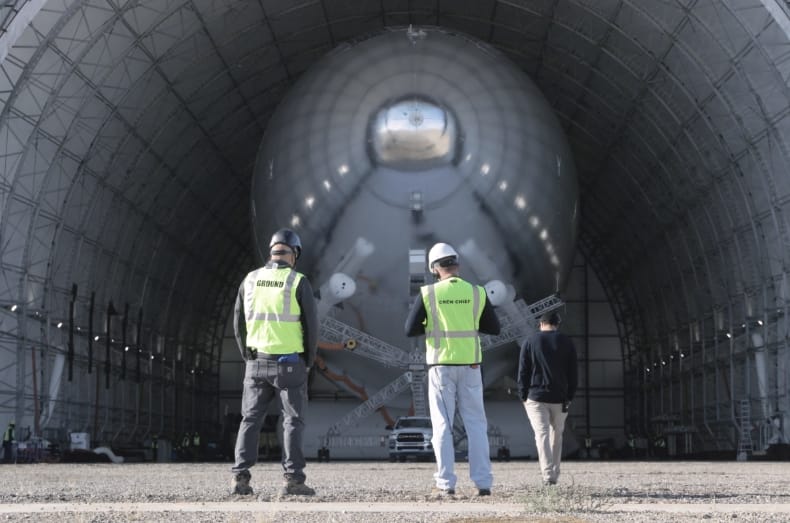
20 EASY REASONS FOR CHOOSING THE SCEYE PLATFORM
Sceye and Softbank Within The Haps Japanese Partnership
1. This Partnership is about more than just Connectivity
In the event that two firms with different backgrounds that are based in New Mexico — a the company that makes stratospheric aircraft and one of Japan’s most prestigious telecoms conglomerates — come together to establish a nationwide network of high-altitude platforms, there is more to it than broadband. The Sceye SoftBank partnership represents a genuine bet on stratospheric infrastructure growing into a permanent and profitable layers of telecommunications across the nation -it’s not a pilot plan or a demonstration for concept. It is the beginning of a full-scale commercial rollout with a clear timeline and a broader ambition for the nation.
2. SoftBank is a strategic investor to support Non-Terrestrial Networks
In the case of SoftBank, its interest in HAPS was not a sudden occurrence. The geography of Japan — thousands of islands, mountainous terrain as well as coastal regions that are frequently struck by earthquakes and typhoons is a source of continuous coverage gaps that the ground infrastructure alone will not be able to economically close. Satellite connectivity aids, but latency and cost remain limiting variables for applications that are mass-market. The stratospheric layer which spans 20 kilometers, keeping its position above specific regions and delivering the lowest-latency broadband available to conventional equipment, solves a lot of these problems simultaneously. For SoftBank, investing on stratospheric-based platforms is a logical extension of an existing strategy to diversify its network beyond terrestrial dependency.
3. Pre-Commercials Services Scheduled for Japan in 2026 Signal Real Momentum
The main point that distinguishes this collaboration from previous HAPS announcements concerns the target for pre-commercial service in Japan at the end of 2026. It’s not just a vague pledge, but rather a particular operational milestone, with infrastructure, regulatory, and commercial implications attached to it. As they move towards precommercial status, the platforms need to be performing station keeping reliably, delivering usable signal quality, and in a way that is compatible with SoftBank’s already existing network architecture. The fact that this date has been publicly stated indicates both parties have met the requirements in terms of technology and regulation for it to be an actual target instead of aspirational marketing.
4. Sceye Offers a dependable platform and Payload Capacity that other platforms struggle to Match
Not all HAPS vehicle can be used to support one of the national commercial networks. Fixed-wing solar vehicles typically sell payload capacity in exchange of speed at altitude. This limits the amount and type of telecommunications equipment they can carry. Sceye’s lighter-than-air airship design takes different route — buoyancy takes the burden of the vehicle, meaning that solar energy can be used to propel, station keeping, and charging onboard systems rather that simply maintaining altitude. The design’s decision to incorporate buoyancy into the structure gives important advantages in payload capacity and mission endurance that matter immensely when trying provide continuous coverage to populated areas.
5. The Platform’s Multi-Mission Capability Makes the Economic Work
One aspect that is often overlooked of the Sceye approach is that a single platform does not need to justify its operating cost with telecoms alone. The same system that offers stratospheric broadband can simultaneously carry sensors for monitoring greenhouse gases, disaster detection, and Earth observations. For a country like Japan where there is a significant dangers from natural disasters and has national commitments in emissions monitoring This multi-payload approach makes the infrastructure significantly easier to justify at a federal as well as a commercial level. Telecoms antennas and climate sensor don’t have to compete- they’re sharing a platform that’s already set up.
6. Beamforming, as well as HIBS Technology Let the Signal be commercially usable
Being able to deliver broadband over 20 kilometres isn’t merely a matter setting an antenna to the downward. The signal must be tailored, directed and managed dynamically to serve users efficiently across a large footprint. Beamforming technology allows the stratospheric telecom antenna to concentrate signal energy toward the regions with the highest demand rather than broadcasting uniformly and wasting capacity over empty land or uninhabited areas. When combined with HIBS (High-Altitude IMT Base Station) standards that make the device compatible with existing 4G as well as 5G device ecosystems, this means ordinary smartphones can connect to the internet without specialized equipment — a critical prerequisite for any mass-market deployment.
7. The Japan’s Island Geography Is an Ideal Test Case for the rest of the world
If the stratospheric network works at a large scale in Japan this template is easily exportable to other nations that has similar coverage issues -which is a majority people around the world. Indonesia as well as the Philippines, Canada, Brazil as well as a variety of Pacific island nations have their own versions of the problem which is the spread of people across terrain that is in opposition to traditional infrastructure economics. Japan’s combination along with regulatory capacity and genuine geographic need provides it with the highest possibility of proving ground for country-wide networks based upon stratospheric platforms. It is likely that what SoftBank and Sceye illustrate will influence deployments elsewhere for many years.
8. Connection to New Mexico New Mexico Connection Matters More Than It appears
Sceye operating out of New Mexico isn’t incidental. The state offers high-altitude testing conditions, an established aviation infrastructure and an airspace suitable for the type of extended flight testing that stratospheric vehicle development requires. As one of the most serious aerospace firms in New Mexico, Sceye has developed its research and development programs in an environment that is supportive of real technological iteration rather than release cycles. The difference between announcing a HAPS platform, and actually keeping one for weeks at it is huge and the New Mexico base reflects a company that has been doing difficult work to fill that gap.
9. Founder Vision The Partnership’s Vision has been shaped by its founder. Future Vision
Mikkel Vestergaard’s career path, which is rooted in the application of technology to address environmental and humanitarian challenges — has definitely changed the direction of what Sceye strives to create and the reasons. The collaboration with SoftBank does not solely represent a commercial telecoms-related play. Sceye’s focus on disaster detection, real-time monitoring and connectivity for regions that aren’t served is an underlying belief that the stratospheric internet should serve broadly-based social objectives alongside commercial ones. This perspective has likely created Sceye a more compelling partner for companies like SoftBank, which is in a strict regulatory and public environment in which corporate objective is paramount.
10. 2026 is the Year that 2026, the Year that Stratospheric Tier either proves itself or Resets Expectations
The HAPS sector has been promoting commercial deployment for a longer time than many people would like to believe. What makes what makes the Sceye and SoftBank timeline genuinely significant is the fact that it links the country of origin, a specific operator, and a particular service milestone to a certain year. If the commercial services that are being offered in Japan launch on schedule and meet the specifications, 2026 will mark the point at which connectivity in the stratosphere shifts from promising technology and into functioning infrastructure. If it fails, the sector will have more to think about regarding whether the engineering issues are as easy to solve like recent reports indicate. Either way, the partnership has drawn a line in the sky worth watching. Follow the recommended detecting climate disasters in real time for website info including softbank haps, sceye careers, softbank sceye partnership, Sceye endurance, Sustainable aerospace innovation, HAPS technology leader, Stratospheric telecom antenna, sceye haps project status, what are haps, softbank investment in sceye and more.
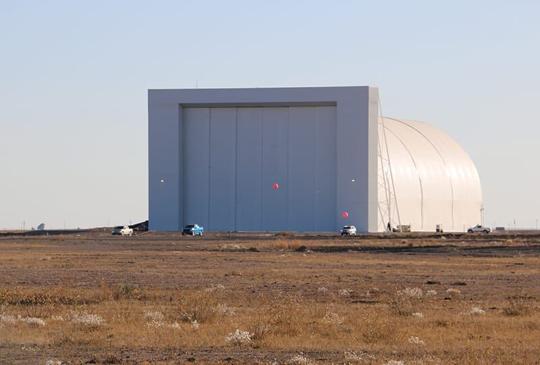
SoftBank’S Haps Pre-Commercial Services: What To Expect In 2026
1. Pre-Commercial is an incredibly specific and Significant Milestone
The language used here is important. Pre-commercial service is particular phases of creation of any new communication infrastructure — beyond experimental demonstrations, beyond proof-ofconcept flight campaigns, and then into the space where real customers receive real-time service, under conditions that roughly match what a full-time commercially-oriented deployment would be. It means the platform is operationally stable, the signal meets quality standards that applications actually rely on and the ground infrastructure is communicating with the antenna of the stratospheric telecom correctly, and the appropriate regulatory authorizations are in place to operate in areas of dense population. Attaining precommercial status isn’t a marketing milestone. It’s an operation-related one, and the fact that SoftBank has made a public commitment to reaching it to Japan in 2026, sets a bar that the engineering on both sides of this partnership has to meet.
2. Japan is the Best Country to Attempt This First
Choosing Japan as a location for Pre-commercial stratospheric space isn’t made up of a. The country combines a set of attributes which make it ideal as a potential first installation environment. The country’s geography — mountains, terrain and thousands of islands that are inhabited extensive and complex coastlines — present real coverage issues that stratospheric equipment is designed to solve. Its regulatory environment is sophisticated enough to deal with the airspace and spectrum concerns that stratospheric processes raise. The existing mobile network infrastructure, run by SoftBank serves as the integration layer that an HAPS platform must connect to. Its population also has the ecosystem of devices and digital literacy needed to utilize stratospheric broadband without having to wait for an extended period of adoption that could delay the meaningful use.
3. Expect the Initial Coverage to Focus in areas that aren’t served or Strategically Important Areas
Pre-commercial deployments don’t attempt to cover an entire country simultaneously. It is more likely to be the focus of the deployment to areas where the gulf between existing coverage and the capabilities that stratospheric connections can deliver is most pronounced and the strategic reason for priority coverage is the strongest. In Japan’s situation, that means that island communities are depend on expensive and restricted Satellite connectivity. Also consider mountainous rural areas where terrestrial networks’ economics never been able to sustain adequate infrastructure and coastal zones where resilience to disasters is a major national issue due to the threat of typhoons and earthquakes to Japan. These regions offer the most precise evidence of stratospheric connectivity’s benefits, and the most useful operational data needed to refine coverage, capacity and platform management prior to the broader rollout.
4. Its HIBS Standard Is What Makes Device Compatibility Possible
One of the first questions that everyone is likely to ask about stratospheric broadband asks if the service requires special receivers, or if it works with common devices. The HIBS Framework is High-Altitude IMT Base Station -is the standard-based answer to this question. By conforming to IMT standards that power 4G and 5G networks globally, a stratospheric platform operating as a HIBS is compatible with the smartphone and device ecosystem that exists within the coverage area. For SoftBank’s pre-commercial services, this means that users who reside in area coverage should be in a position access the stratospheric connection via their existing devices and without any additional hardware — a critical aspect for any company that wants to expand its reach to all populations, including those in remote regions who require other connectivity options and are least positioned to invest in equipment that is specialized.
5. Beamforming Can Determine How Capacity is Distributed
A stratospheric platform covering an extensive area doesn’t automatically deliver uniform useful capacity across the area. The way that spectrum and energy of the signal are distributed throughout the coverage area is dependent on beamforming capability — the platform’s capability to direct the signal towards regions where demand and customers are centered, instead of broadcasting in a uniform manner across large areas of uninhabited. As part of SoftBank’s precommercial phase making sure that beamforming from an spheric telecom antenna is able to effectively provide commercially feasible capacity to specific areas within a vast coverage area will be just as important as showing the coverage area. A wide footprint with small, non-usable capacity does not prove much. Targeted delivery of genuinely usable broadband to defined zones of service confirms the commercial model.
6. 5G Backhaul Applications Could Precede Direct-to-Device Services
In certain deployment scenarios the earliest and easiest method to establish the reliability of stratospheric connectivity does not involve direct-to consumer broadband but 5G-backedhaul – which is connected to existing infrastructure on the ground in areas with limited terrestrial backhaul or is not available. A remote community might have some network equipment that is ground-level but isn’t connected in a high-capacity way to the greater network which is what makes it useful. The stratospheric technology that provides that backhaul link can provide functional 5G coverage to areas served by existing ground equipment without having to require end users to connect with the stratospheric systems directly. This is a simpler use case to verify technologically, offers tangible and quantifiable value, and provides operational certainty in system performance before the more complex direct-to device service layer is added.
7. A Sceye’s platform performance in 2025 Sets the Stage for 2026.
The goal of pre-commercial services for 2026 is dependent entirely on what will happen when the Sceye HAPS airship achieves operationally in 2025. Performance of the payload, validation of station-keeping in real-time stratospheric conditions energetic system behavior over a variety of diurnal cycles, and the integration testing that is required to confirm that the platform’s interface works with SoftBank’s network infrastructure all require adequate maturity before commercial services can be launched. Updates on Sceye Airship status of HAPS up to 2025 will not be considered as minor informational items, they provide the best indicators of which milestones in 2026 are tracking according to plan or whether it is accruing the type or technical debt that pushes commercial timelines out. The engineering progress in 2025 is the 2026 story being made in advance.
8. Disaster Resilience is a Capability Tested, Not Just a Claimed One
Japan’s vulnerability to disasters means any pre-commercial stratospheric service operating across the nation will almost certainly experience challenges — storms, earthquakes, disruptions to infrastructure- that will test the system’s resilience and its ability to function as an emergency communications infrastructure. This isn’t just a matter on the use context. This is one of the most beneficial features. A stratospheric platform that operates a station and continues providing connectivity and observation capability during major weather or seismic event in Japan illustrates something that no test controlled by a lab can duplicate. The SoftBank pre-commercial phase will provide concrete evidence of how the infrastructure performs when terrestrial networks are damaged and provide the exact evidence that any other potential operators in regions that are prone to natural disasters will need know before committing own deployments.
9. The Wider HAPS Investment Landscape Will Respond to What Happens in Japan
The HAPS sector attracted significant investment from SoftBank and other companies, however the wider telecoms infrastructure investors remain in a constant state of observation. Large institutional investors, national telecoms providers in other countries and governments that are evaluating stratospheric structures for their own monitor and coverage needs monitor what is happening in Japan with an intense interest. A successful launch of precommercial infrastructure -platforms on stations operating, services in operation, and benchmarks for performance -that will help accelerate investment decisions across the sector by a way that ongoing demonstration flights as well as partnership announcements cannot. On the other hand, significant delays or shortfalls in performance could prompt an adjustment of timelines throughout the entire industry. The Japan installation is an incredibly significant issue for the whole stratospheric connectivity sector, not only the Sceye SoftBank partnership specifically.
10. 2026 will show us whether Stratospheric Connectivity has crossed the Line
There’s a line that runs through the evolution of any new infrastructure technology between the phase where it is promising and the point at which it’s a real. Mobile networks and Internet infrastructure all crossed that line at specific times — not when technologies were first demonstrated but when it was initially functioning in a way to have institutions and citizens considering its existence more then its potential. SoftBank’s precommercial HAPS applications in Japan represent the most credible in the near future for the moment when connectivity across the stratospheric region crosses that line. If the platforms will be able to support stations throughout Japanese winters, if the beamforming can provide enough capacity for islands, and if it can function under the type of weather conditions Japan typically encounters, will determine if 2026 is known as the year in which the stratospheric internet became real infrastructure or if the timeline was reset again. Read the recommended Station keeping for blog tips including softbank investment in sceye, SoftBank investments, Sceye News, softbank sceye partnership, what are high-altitude platform stations, Sceye Founder, Beamforming in telecommunications, High altitude platform station, whats the haps, HAPS investment news and more.