EVERYTHING IS SHIFTING FAST- KEY SHIFTS DEFINING LIFE IN THE YEARS AHEAD
Top 10 Remote Work Trends Transforming How We Work Modern Workplace Through 2026/27
The way people work evolved more rapidly in the past few years than over the last few decades. Flexible and hybrid working arrangements have gone from a temporary solution to permanent fixtures, and these ripple effects are being felt across organisations including cities, jobs, and workplaces. For some, the shift is a relief. For others, it has caused serious questions about productivity improvement, culture, and even progress. However, it is clear that there’s no turning back to the traditional way of working. Here are 10 most popular remote work trends that are changing the current workplace in 2026/27.
1. Hybrid work becomes the dominant Model
The debate on fully remote over fully on-site has been settled on a sensible middle space. Hybrid-working, which lets employees are able to split their time between home and a physical workplace is the predominant method across the majority of knowledge-based industries. The details are diverse with regards to structured two and three day office requirements, to highly flexible and flexible arrangements designed around requirements of the team. The thing that most companies have realized is that strict five-day schedules for office work are becoming difficult to justify to employees who have proven their ability to produce results from any place.
2. Asynchronous Communication Takes Priority
As teams get more geographically dispersed and the time zones of different countries more diverse The assumption that everyone must be available simultaneously is fading away. Asynchronous communication, in which messages such as updates, messages, and decision-making are documented and processed in a person’s own time is now an actual top priority for the organization rather than being a last-minute thought. Workflows that are async-based are taking off, and the shift in mindset towards empowering people to manage their own personal time instead of being able to monitor their online presence is gaining momentum.
3. AI-powered productivity tools transform daily Work
The introduction of AI into everyday work tools has been faster than thought. From meeting summaries and automated task management, to AI writing aids and intelligent scheduling, the electronic toolkit for remote workers in 2026/27 has a starkly different look from even two years ago. The most important change isn’t one tool but the effect of AI in the administration layer of work, which allows people from having to do those tasks that really require human judgment and imagination.
4. This is how the Home Office Becomes A Serious Investment
The years have passed since widespread remote work that has resulted in the creation of a kitchen table is giving way to more purpose-built office spaces. Employers and employees alike are treating the home working environment as a valuable infrastructure to invest in. Comfortable furniture, high-end Lighting, acoustic panels along with high-quality audio, video equipment are increasingly standard rather than premium. Certain employers offer to-work from home allowances part to their benefits package, believing that a well-equipped remote worker is an effective one.
5. Digital Nomadism Gains Mainstream Legitimacy
What was once a type of lifestyle option that was associated with self-employed and freelancers is becoming a accepted working method employed by established businesses. The majority of businesses offer policies that allow for flexibility in location. allow employees to work from various countries for longer lengths of time, provided that tax compliance requirements are adhered to. The infrastructure to support this kind of work from co-working groups to visas for nomads offered by more and more countries, continues to grow and mature.
6. Remote Work Culture demands thoughtful Design
One of the most consistent issues that arise from distributed working is maintaining a consistent group culture even when individuals rarely or never interact physically. Leading organisations are learning that culture in remote environments doesn’t come naturally. It must be designed. This is why it’s important to have intentional onboarding methods, regular structured touchpoints, online social rites of passage, and clear frameworks for recognition and the process of growth. Companies that view culture as something that only happens in the workplace are continually losing all ground in retention as well as engagement.
7. Cybersecurity For Remote Workers Gets Tighter Significantly
The growing use of remote work dramatically increased the attack surface that cybercriminals can exploit, and the response of businesses has been significant. Zero-trust security strategies, compulsory VPN usage, monitoring of endpoints, and multi-factor authentication are baseline expectations rather than advanced security measures. Security training for employees has now become an ongoing requirement rather than being a single induction due to the fact that remote workers who are not within their corporate network’s boundaries pose the risk of vulnerability as well as a potential first step to defend.
8. It’s the Four-Day Work Week Gains Traction
Tests of pilot programs for a 4-day schedule have consistently delivered good results across a variety of industries and nations, and more companies are moving from trial to permanent use. The argument that output and focus count more than the hours you log, aligns naturally with the remote working concept. In the race for people in a workforce where flexibility is a key demand, the week-long four-day schedule is evolving from a radical test into a viable differentiation.
9. Performance Measurement shifts to Outcomes
Monitoring remote teams’ the activity of employees, tracking login times or monitoring the use of screens has proven ineffective and corrosive to trust. The shift to outcome-based management, in which employees are evaluated on the outcomes they deliver rather than how it appears they are busy is one of the more significant cultural changes remote work has been accelerating. This requires a clearer definition of goals, regular check-ins to monitor progress, and managers who can manage without the direct supervision of their employees. It also demands greater accountability from employees.
10. Mental Health And Boundaries Become Organisational Responsibilities
The blurring between work and home lives that remote working has the potential to result in has brought the issue of mental health and boundary-setting onto the agenda of business. Burnout anxiety, isolation, and constantly-on work patterns are recognized as threats and not personal faults, and employers are now expected to tackle them to a greater extent. Guidelines on working hours, remote disconnect expectations, access psychological health care, and proactive training for managers are becoming commonplace elements of what a reputable remote-friendly employer will look like by 2026/27.
The process of change at work has been ongoing and uneven across different roles, industries and individuals undergoing this in a variety. What the trends above share is a shared direction: towards greater flexibility and deliberate communication, and a fundamental revision of what it means that a workplace is productive. Organisations that engage seriously with the process of rethinking are building workplaces worth belonging to. To find more detail, explore the top For additional context, check out the top italiaoggi24.it/ for more insight.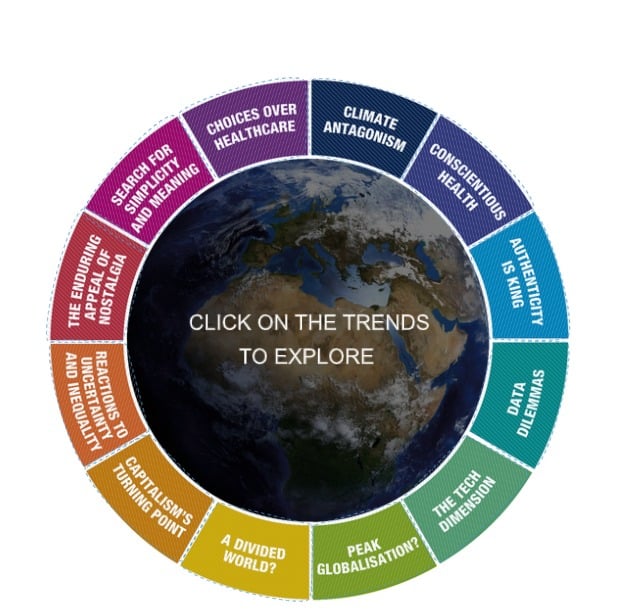
The 10 Internet Security Developments Every Internet User Should Know In 2027
Cybersecurity is now well beyond the worries of IT departments and technical specialists. In the world of personal finances, health records, communications for professionals, home infrastructure and public services are accessible via digital means security in this digital realm is a issue for all. The threats continue to evolve faster than many defenses are able keep up with, fueled by increasingly capable attackers, an increasing threat surface, and the growing advanced tools available for the malicious. Here are the ten cybersecurity tips that every online user must be aware of heading into 2026/27.
1. AI-Powered Attacks Boost The Threat Level Significantly
The same AI capabilities which are enhancing cybersecurity defense tools are also being abused by attackers in order to enhance their tactics, making them more sophisticated, and tougher to spot. Phishing emails created by AI are not distinguishable from legitimate communications through ways which even technically informed users may miss. Automated tools for detecting vulnerabilities find weaknesses in systems faster than human security staff can fix them. Deepfake video and audio are being used to carry out social engineering attacks to impersonate colleagues, executives and relatives convincingly enough to allow fraudulent transactions. The decentralisation of powerful AI tools has meant attacks that had previously required large technical skills can now be used by many more malicious actors.
2. Phishing is becoming more targeted and Effective
The phishing attacks that mimic generic phishing, like the obvious mass email messages that encourage recipients to click on suspicious hyperlinks, continue to be commonplace, but they are added to by targeted spear phishing attacks that feature details of the person, a real context, and real urgency. Attackers are using publicly available info from LinkedIn, social media profiles and data breaches for messages that appear to be from trusted and known contacts. The amount of personal data accessible to develop convincing pretexts has never ever been higher in addition to the AI tools used to design targeted messages at a scale have eliminated the limitation on labour that was previously limiting the potential for targeted attacks. Be skeptical of any unexpected communication, however plausible they might appear to be, is becoming a fundamental survival ability.
3. Ransomware Continues To Evolve And Expand Its Intents
Ransomware, a malicious program that encrypts an organisation’s data and asks for payment for your release. This has developed into an industry worth billions of dollars that boasts a level of efficiency that is comparable to the level of business. Ransomware-as-a-service platforms allow technically unsophisticated actors to deploy attacks developed by specialist criminal groups for a share of the proceeds. The targets have shifted from large companies to schools, hospitals local authorities, hospitals, and critical infrastructure, with attackers calculating that organisations unable to tolerate operational disruption are more likely to pay quickly. Double extortion methods, like threatening to release stolen data if payment is not made, have become a standard procedure.
4. Zero Trust Architecture Becomes The Security Standard
The conventional model for security of networks was based on the assumption that everything within an organization’s perimeter network could be trusted. Due to the influence of remote work as well as cloud infrastructures mobile devices and increasingly sophisticated attackers who can obtain a foothold within the perimeter has made this assumption untrue. Zero-trust architecture based according to the idea that no user or device should be trusted by default regardless of their location, is now the norm for serious organisational security. Every access request is verified, every connection is authenticated as well as the potential that a breach can cause is limited by strict segmentation. Implementing zero-trust completely is challenging, yet the security improvement over perimeter-based models is substantial.
5. Personal Data is Still The Main Theme
The value of personal details to as well as surveillance operations ensures that individuals remain principal targets regardless of whether they work for a highly-publicized company. Identity documents, financial credentials, medical information, and any other information that enables convincing fraud constantly sought. Data brokers with huge amounts in personal information offer large global targets. Additionally, their security breaches can expose people who never interacted directly with them. Controlling your digital footprint, knowing the extent of data about you and in what form they are, and taking measures in order to keep your information from being exposed are becoming vital personal security techniques rather than issues for specialist firms.
6. Supply Chain Attacks Strike The Weakest Link
Instead, of attacking a security-conscious target more directly, sophisticated attackers frequently breach the software, hardware or service providers a target organisation depends on, using the trusted relationship between customer and supplier as an attack vector. Supply chain attacks could compromise hundreds of businesses at the same time through just one attack against a frequently used software component or managed service supplier. The biggest challenge for organizations to secure their posture is only as strong because of the protections offered by everything they depend on that is a huge and challenging to audit. Vendor security assessment and software composition analysis are on the rise because of.
7. Critical Infrastructure Faces Escalating Cyber Threats
Water treatment facilities, transport technology, financial infrastructure, and healthcare infrastructures are all targets for cyber criminals and state-sponsored actors with goals ranging from extortion and disruption to intelligence gathering and preparing capabilities for use in geopolitical conflicts. Several high-profile incidents have demonstrated the impact of successful attacks on vital infrastructure. States are increasing the resilience of critical infrastructures, and they are developing frameworks for both defence and intervention, but the complexity of older operational technology systems and the challenges of patching and securing industrial control systems mean that vulnerabilities remain common.
8. The Human Factor is the Most Exploited Security Risk
Despite the advanced technology of software for security, successful attack tools continue to use human behavior instead of technological weaknesses. Social engineering, the manipulation of people into taking action that compromise security, is the basis of the majority of successful breaches. Employees who click malicious links or sharing credentials due to convincing impersonation, or providing access using fake pretexts remain the most common security points of entry for attackers across every field. Security systems that treat human behavior as a technological problem that can be created instead of as a capability which can be developed over time fail to invest in the education of awareness, awareness, as well as psychological knowledge that will enhance the human layer of security more robust.
9. Quantum Computing Creates Long-Term Cryptographic Risk
The majority of the encryption used to safeguards web-based communications, transactions in the financial sector, and other sensitive information relies on mathematical equations that computers are unable to solve in a reasonable timeframe. Quantum computers with sufficient power would be able of breaking popular encryption standards and making data currently secured vulnerable. Although quantum computers with the capacity of doing this don’t yet exist, the danger is so real that many government authorities and other security standard organizations are changing to post-quantum cryptographic techniques created to resist quantum attacks. Security-conscious organizations with high-level confidentiality requirements must begin preparing for their cryptographic transition as soon as possible, instead of waiting for the threat to develop into a real-time issue.
10. Digital Identity And Authentication Move Beyond Passwords
The password is one of the most frequently problematic elements of security in the digital age, combining ineffective user experience with fundamental security weaknesses that the decades of recommendations on strong and unique passwords did not be able to address in a sufficient way for a larger population. Biometric authentication, passwords, the use of security keys that are hardware-based, as well as others that are password-less are enjoying popularity as secured and more suited to the needs of users. The major operating systems and platforms are pushing forward the shift away from passwords and the infrastructure for an alternative to password authentication is rapidly maturing. This change will not occur within a short time, however the direction is apparent and the speed is increasing.
Cybersecurity in 2026/27 is not an issue that technology by itself can fix. It requires a combination advanced tools, smarter business policies, more savvy individual actions, and the development of regulatory frameworks which hold both attackers as well as inexperienced defenders accountable. For people, the most crucial information is that a good security hygiene, secure and unique identity for every account, be wary of any unexpected messages, regular software updates, and awareness of what personal data is available online is certainly not a guarantee. However, it is a meaningful reduction in security risks in an environment where the risks are real and growing. To find further detail, check out these reliable publicangle.org/ to read more.